


Figuring out how much money you need to retire comfortably is one of the most important financial questions you’ll ever answer. The good news? You don’t need a finance degree to get a solid estimate. Most people should aim to replace about 70–80% of their pre retirement income and have roughly 8–12 times your annual salary saved by their late 60s.
Quick answer: a fast rule-of-thumb for “how much do I need?”
If you want a straightforward answer before diving into the details, here are the benchmarks that financial experts consistently recommend:
Save about 10–15% of your gross income per year starting in your 20s. Aim for 1x salary saved by age 30, 3x by 40, 6x by 50, 8x by 60, and around 10x by age 67. Plan to fund at least 25 times your expected first-year retirement spending to support a ~4% withdrawal rate for 25–30+ years.
To make this concrete: someone earning $80,000 planning to retire at 67 might target $800,000–$1,000,000+ in total retirement savings, adjusted for other income sources like social security benefits and pension benefits.
These targets assume you’ll receive social security retirement benefits and have been saving consistently throughout your career. Now let’s break down exactly how to calculate your personal number.
Step 1: Decide when you want to retire
Your retirement age is one of the biggest drivers of how much is enough. The earlier you leave work, the more years you need to fund—and the fewer years your investments have to grow.
Retiring early (62-64): If you plan to retire before full retirement age, you’ll need around 13–15x your income saved. You’ll also face reduced social security retirement benefits—claiming at 62 means accepting up to 30% less than waiting until your full retirement age of 67.
Retiring at traditional ages (65-67): This is the sweet spot for most people. You’ll need roughly 10–12x your final salary, and you can claim full social security benefits at 67 if you were born in 1960 or later.
Working longer (68-70): Delaying retirement to 70 dramatically reduces your target savings to around 8–9x income. Each year past 67, your social security benefits increase by about 8%, plus your portfolio has more time to compound.
Consider this comparison: a person born in 1960 retiring at 65 might need around 12x income saved because they’re funding 25+ years without work. That same person retiring at 70 might only need 8–9x income due to a shorter retirement and maximized social security administration benefits potentially exceeding $40,000 annually.
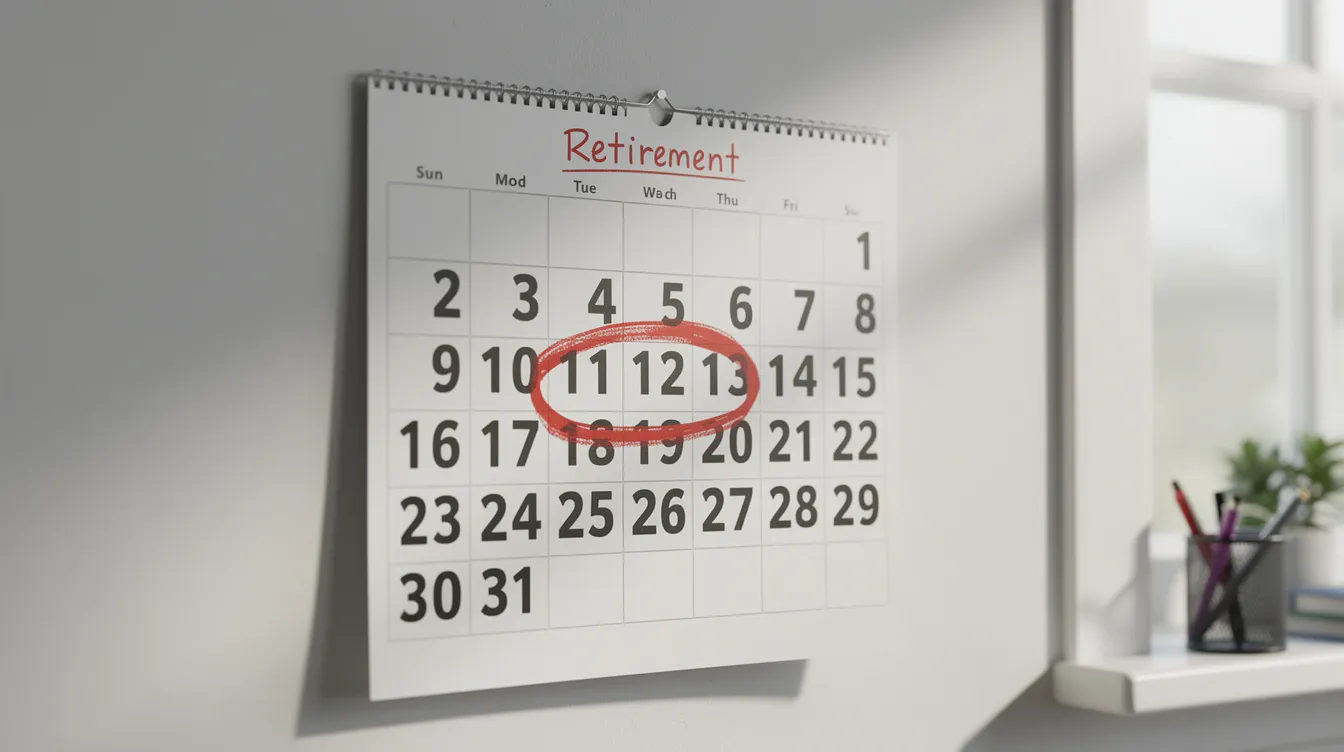
Step 2: Decide how you want to live in retirement
Your desired retirement lifestyle determines what percentage of your pre retirement annual income you actually need to replace. Not everyone wants—or needs—to maintain their current lifestyle in retirement.
Lifestyle Type | Replacement Rate | Example (on $100k income) |
|---|---|---|
Lean (downsize, limited travel) | 60–70% | $60,000–$70,000/year |
Maintain (similar housing, some travel) | 70–80% | $70,000–$80,000/year |
Upgrade (frequent travel, hobbies, gifting) | 90–120%+ | $90,000–$120,000+/year |
For someone earning $80,000, a “maintain” lifestyle would require about $56,000–$64,000 in annual retirement income. A “lean” approach drops that to $48,000–$56,000, while an “upgrade” lifestyle pushes needs to $72,000 or more. |
Your desired lifestyle directly impacts your target retirement savings and how much you need to save each year.
Step 3: Estimate your retirement expenses
Rather than guessing, build a simple retirement budget using today’s dollars, then adjust for inflation later. This gives you a realistic picture of your estimated expenses.
Major expense categories to account for include housing (mortgage or rent, property taxes, maintenance—typically 25–35% of your budget), healthcare and insurance (Medicare premiums, Medigap coverage, out-of-pocket costs—15–25% of budget), daily living (food, utilities, transportation—roughly 20%), discretionary spending (travel, hobbies, gifts—15–25%), and contingency funds for emergencies (about 10%).
Here’s a sample monthly retirement budget for a moderate-spending couple in 2026:
Category | Monthly Amount |
|---|---|
Housing | $1,800 |
Healthcare | $700 |
Food & Utilities | $900 |
Transportation | $600 |
Travel & Leisure | $1,000 |
Miscellaneous | $300 |
Total | $5,300 |
This totals approximately $63,600 per year—aligning with 70–80% replacement for someone who earned $80,000–$90,000 before retirement. Healthcare costs tend to increase significantly after age 75, often consuming 15–20% of your retirement budget. |
Step 4: Add up your guaranteed and other income sources
How much retirement savings you actually need depends on the gap between your expenses and reliable income that doesn’t come from your portfolio.
Social Security: Visit ssa.gov to create a my Social Security account and see your personalized estimate. In 2026, average benefits at full retirement age run approximately $1,900–$2,100 per month. Claiming at 62 reduces this by 25–30%, while delaying social security until 70 increases it by about 24–32% compared to claiming at 67.
Pensions: If you have a traditional pension (common in government and union jobs), it might cover 20–50% of your final salary. Other retirement plan benefits like these provide predictable monthly income.
Other income: Consider rental income, part-time work in early retirement years, annuity payments, or other retirement accounts generating passive income.
Example: A household expecting $40,000/year combined social security by age 67 plus $10,000/year from a small pension has $50,000 of stable anticipated income before touching retirement funds. Subtract this from your annual spending target to find your “income gap.”
Step 5: Translate your income gap into a savings target
Once you know your annual income gap, you can estimate how much retirement savings you’ll need to have saved by your retirement start date.
The 25x rule provides the foundation: multiply your required first-year retirement income (after social security and pensions) by 25. This assumes a ~4% withdrawal rate, which historical data suggests can sustain 25–30 years of withdrawals in most market conditions.
Example calculation:
- Annual expenses: $80,000
- Non-portfolio income (social security + pension): $35,000
- Income gap: $45,000
- Using 25x rule: $45,000 × 25 = $1,125,000 in retirement savings needed
Different withdrawal rates change the math:
Income Gap | 3% Rate (33x) | 4% Rate (25x) | 5% Rate (20x) |
|---|---|---|---|
$30,000 | $990,000 | $750,000 | $600,000 |
$45,000 | $1,485,000 | $1,125,000 | $900,000 |
$60,000 | $1,980,000 | $1,500,000 | $1,200,000 |
A 3% rate is more conservative for longer retirements or uncertain market conditions. A 5% rate increases risk of depleting funds early. |
Step 6: Use age-based savings milestones as a progress check
Age-based milestones help you gauge whether you’re roughly on track at each decade—even without detailed calculations.
Age | Target Savings Multiple |
|---|---|
30 | 1x annual salary |
40 | 3x annual salary |
50 | 6x annual salary |
60 | 8x annual salary |
67 | 10x annual salary |
For someone earning $90,000 at age 50, a 6x target means aiming for around $540,000 in retirement accounts and other long-term savings. |
If you’re behind these benchmarks, don’t panic. These are guidelines based on assumptions like 15% savings rates and retirement at 67. You can close gaps by increasing contributions, working longer, or adjusting your retirement lifestyle expectations.

Step 7: Choose a realistic savings rate and investment approach
The amount you save for retirement each year often matters more than trying to beat the market with a particular investment.
Target 10–15% of gross income for retirement throughout your working years, including any employer match. If you start later—say, in your 40s—aim for 20% or higher.
Maximize employer sponsored retirement plan contributions like 401(k), 403(b), or 457(b) accounts, especially to capture matching contributions. That employer match is essentially free money that can double your effective contribution rate.
Use IRAs for additional tax-advantaged saving. A traditional IRA lets you contribute pre tax dollars, reducing current taxable income. A Roth IRA uses after-tax money but grows tax-free, with tax-free withdrawals in retirement. An individual retirement account of either type can supplement your workplace plan.
For investments, diversify across mutual funds holding stocks and bonds. Maintain higher stock allocation (80–90%) in your 20s–40s, gradually shifting to more bonds as you near retirement. Low-cost index funds or target-date funds work well as simple defaults.
Scenario: A 30-year-old saving 12% of a $70,000 income (including match), earning an assumed 6–7% average annual return, could accumulate roughly $900,000–$1.1M by age 67. Past performance doesn’t guarantee future results, but compound interest working over 37 years is powerful.
Step 8: Adjust for inflation, longevity, and healthcare
Planning in today’s dollars makes calculations easier, but your actual retirement will be affected by future inflation, longer life expectancy, and rising health care costs.
Inflation: Long-term U.S. inflation has averaged around 2–3% annually, though 2020–2023 saw higher spikes. Use 2.5–3% for projections, understanding that future dollars will buy less than today’s dollars.
Longevity: Many 65-year-olds today will live into their mid-80s, and roughly 25% will reach 95+. Planning for a 30-year retirement to age 95 is a prudent baseline—don’t rely solely on average life expectancy.
Healthcare: Health care costs often become the largest budget item after age 75. A 65-year-old couple may need several hundred thousand dollars over their lifetimes for premiums, out-of-pocket costs, and potential long-term care. Consider separate long-term care insurance rather than relying solely on retirement income.
Revisit your retirement plan every few years to adjust for actual investment results, cash flow changes, and shifts in health or market conditions.
Step 9: Catch-up strategies if you’re behind
Many people over 40 feel behind on their retirement savings goals—and meaningful progress is still possible with focused changes.
Save more aggressively. Increase contributions by 1–2 percentage points each year. Once you hit 50, take advantage of catch-up contributions—current IRS rules allow an extra $7,500 annually in 401(k)s and $1,000 in IRAs above standard limits.
Work longer or retire in stages. Delaying retirement by even 2–5 years can substantially reduce the much money you need to have saved while increasing social security benefits. Each year of delay post-67 adds about 8% to your benefit.
Spend less now and in retirement. Reduce fixed costs like housing and vehicles to both free up savings and lower your retirement budget needs. Consider downsizing before retirement and planning for meaningful retirement presents to mark the transition.
Consider part-time work. Generating even $15,000–$20,000 annually in early retirement through consulting or other income can significantly reduce portfolio withdrawals.
Real scenario: A 52-year-old earning $110,000 with $250,000 in current retirement savings who increases their rate to 20% ($22,000/year) and works until 69 instead of 65 can close much of the gap toward a 10x-income target—especially with moderate investment returns and maximized social security.
Step 10: Decide whether to get professional help
Rules of thumb are powerful starting points, but complex situations benefit from individualized advice from a financial advisor or financial planner.
Consider professional help if you have multiple retirement income sources like pensions, rental income, or stock options. It’s also valuable when you’re within 5–10 years of your plan to retire and want a detailed withdrawal and tax strategy, or if you’re making major decisions like selling a business or buying an annuity.
A professional can build a comprehensive retirement plan coordinating social security timing, portfolio withdrawals, and tax efficiency. They can stress-test your plan against market downturns and longevity risk, helping you adjust for changing financial goals.
Even if you start with a retirement calculator and basic benchmarks, checking your plan with an expert or tax advisor every few years increases confidence and reduces uncertainty around your retirement funds.
Bringing it all together: your personal “How much do I need?” number
Here’s how to combine everything into a simple, repeatable process:
- Pick a target retirement age and rough lifestyle (Steps 1 & 2)
- Estimate annual expenses in today’s dollars (Step 3)
- Subtract reliable income (social security, pensions, rental income) to find your annual gap (Step 4)
- Multiply the gap by 25 to get your target retirement savings (Step 5), then compare to age-based milestones (Step 6)
Worked example: A 40-year-old earning $95,000 wants to retire at 67 with a “maintain” lifestyle. At 75% replacement, they need roughly $71,000/year. With $30,000/year expected from social security at 67, their income gap is $41,000. Using the 25x rule: $41,000 × 25 = approximately $1,025,000 target nest egg.
At age 40, they should have around 3x income saved (~$285,000). If they’re below that milestone, it’s time to increase their monthly contribution or consider a later retirement age.

Your retirement target isn’t fixed—it evolves as your annual salary, savings goals, and life circumstances change. Calculate your own number using this framework today. Then set a reminder to revisit it every year or two, adjusting as your how much income needs, current age, and current lifestyle shift. The best retirement plan is one you actually review and act on.