

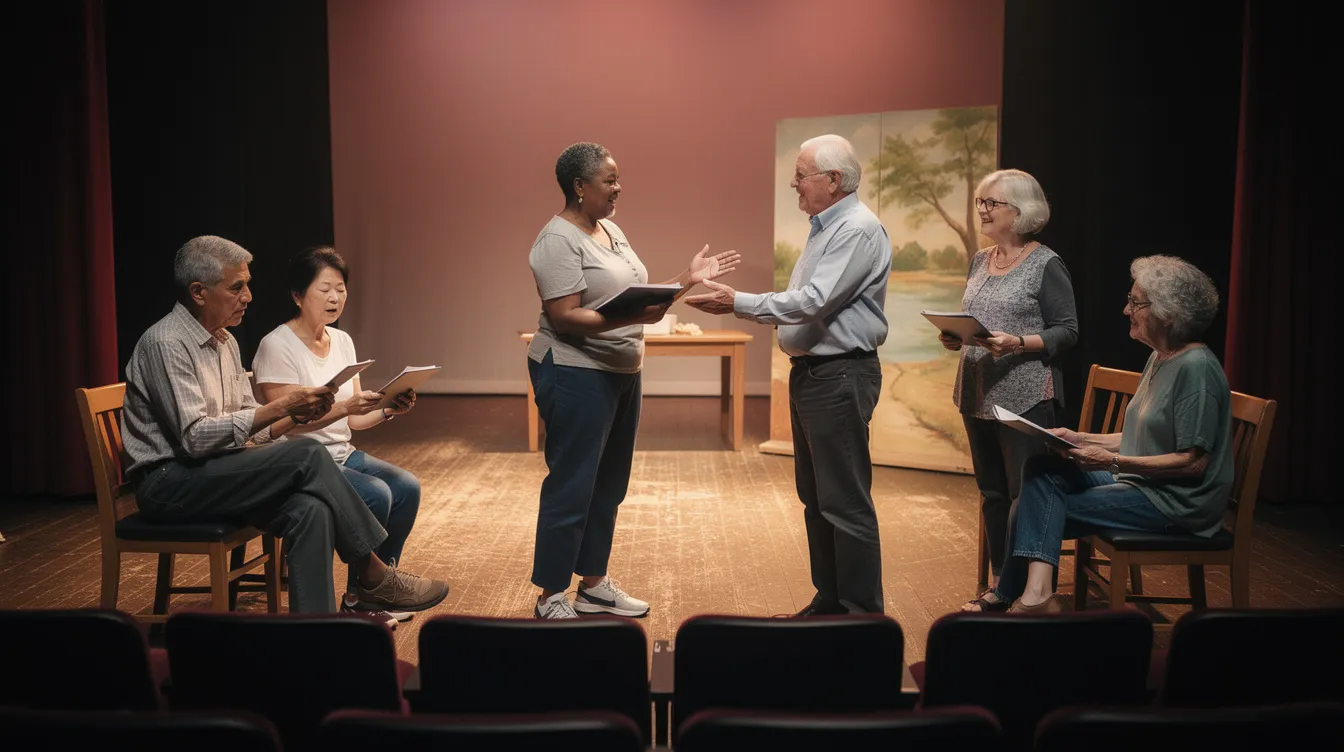
If you’re in your 60s, 70s, or 80s and wondering whether community theater has room for you, the answer is a resounding yes. Perhaps you performed in a school play decades ago, or maybe you’ve never stepped on a stage in your life. Either way, local theaters across the country are actively looking for people exactly like you.
Community theater refers to nonprofit, volunteer-driven performance groups operated by and for residents of a local area. Unlike professional theater with paid actors and crew, most community theatres welcome participants of all ages and experience levels—no formal training required. These theatre groups produce plays, musicals, and original works, offering opportunities that span acting, technical support, and audience services.
Here’s something that might surprise you: over 7,000 community theaters operate nationwide, and many actively cast older adults in roles that demand authentic maturity. Grandparents, authority figures, narrators—these characters benefit from the gravitas that only real life experience can provide. Getting involved quickly can boost your social connections, sharpen your mind, and build confidence in ways you might not expect.
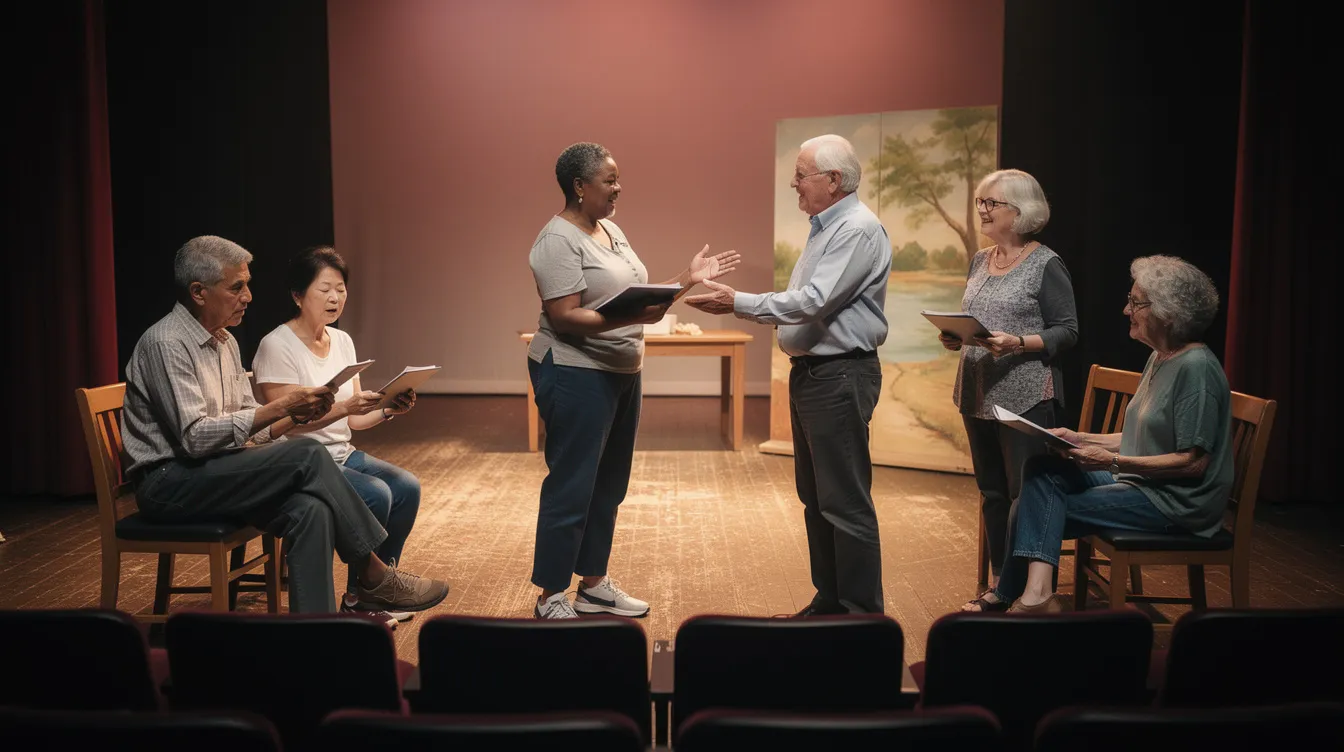
Step 1: Find Senior-Friendly Community Theater Opportunities Near You
The fastest way to get involved in community theater as a senior is to identify what’s available in your area. You might be surprised by how many options exist within a short drive from home.
Start with straightforward online searches. Try phrases like “community theater near me,” “senior theater group [your city],” or “55+ acting classes [your city].” State theater associations—such as the Colorado Community Theatre Coalition, Georgia Theatre Conference, and Theatre Association of New York State—maintain directories of member groups open to all ages.
Don’t overlook local resources. Your city’s Parks and Recreation department may sponsor 55+ drama clubs, and library community bulletin boards frequently post audition calls and volunteer needs for 2025-2026 seasons. Church drama ministries and retirement community troupes often extend invitations to external seniors as well.
Here are practical search tips to get started:
- Call or email theater box offices directly and ask: “Do you have roles or volunteer needs suitable for older adults?”
- Check your local arts council website for upcoming shows and casting announcements
- Visit library and YMCA bulletin boards for fliers about productions
- Follow local theaters on social media for real-time audition alerts
- Look into dedicated senior programs like VIVA Theater in Boulder, Colorado, or Theater 55 in Minneapolis
Many regular local theaters—not just senior-specific ones—eagerly cast mature performers because genuine age diversity is challenging to source otherwise. Directors know that a 25-year-old playing a grandmother rarely convinces an audience the way you can.
Step 2: Choose How You Want to Participate (Onstage, Backstage, or Front of House)
One of the best aspects of community theater is flexibility. You can choose involvement that matches your energy level, mobility, and interests—and change your role from one production to the next.
Onstage, senior actors often shine in character roles that benefit from real-life maturity. Judges, mayors, family elders, and narrators in classics like “Our Town” or contemporary family dramas frequently require the authenticity that younger performers simply cannot replicate. Programs like Broadway Senior by Music Theatre International specifically empower older adults as creators, singers, and storytellers.
If the spotlight isn’t your preference, backstage and front-of-house positions keep you involved in the performing arts without memorizing a single line. Costuming, props assembly, set dressing, greeting guests, and managing refreshments all contribute to a successful community production.
Many seniors mix roles over time—acting in one show while volunteering for the next. Consider these options:
- Character acting roles (grandparents, narrators, authority figures)
- Ushering and ticket scanning
- Costume and wardrobe assistance
- Props coordination
- Set painting and construction during daytime hours
- Box office and program distribution
For those with limited mobility or hearing concerns, seated roles work well: script reading, box office duties, or program folding. The arts welcome your talent regardless of physical limitations.
Step 3: Getting Ready for Your First Audition as a Senior
Many seniors haven’t auditioned since high school—or ever. That’s completely normal, and community theater auditions are designed to be low-pressure compared to professional theater tryouts.
Start by checking the theater’s website or social media for audition dates and requirements. Theaters typically specify whether they want a prepared monologue, a 16-bar song for musicals, or a cold reading from the script. Age-appropriate audition material might include short monologues from classic plays, contemporary family dramas, or senior-centered shows from resources like the ArtAge Senior Theatre Resource Center.
Preparation makes a difference. Practice aloud at home, record yourself on your phone to review, and run lines with a friend, spouse, or grandchild in the week before the audition. You don’t need professional headshots, polished résumés, or decades of credits. Directors value punctuality, coachability, and a positive attitude over prior experience.
Many local theaters offer free audition workshops or open houses in early 2025-2026 seasons. These serve as gentle first steps for anyone who feels nervous about jumping straight into a formal audition.
Here are simple audition-day tips:
- Arrive 15-30 minutes early to complete paperwork and settle your nerves
- Wear comfortable clothing that allows easy movement
- Bring your glasses, hearing aids, and any assistive devices you use
- Carry water and labeled sheet music if singing
- Maintain a positive attitude—directors remember demeanor
- Send a brief thank-you email after the audition
Remember: community theaters actively seek senior citizens for age-authentic casting. Your ability to portray a real person with genuine life experience gives you a competitive edge.
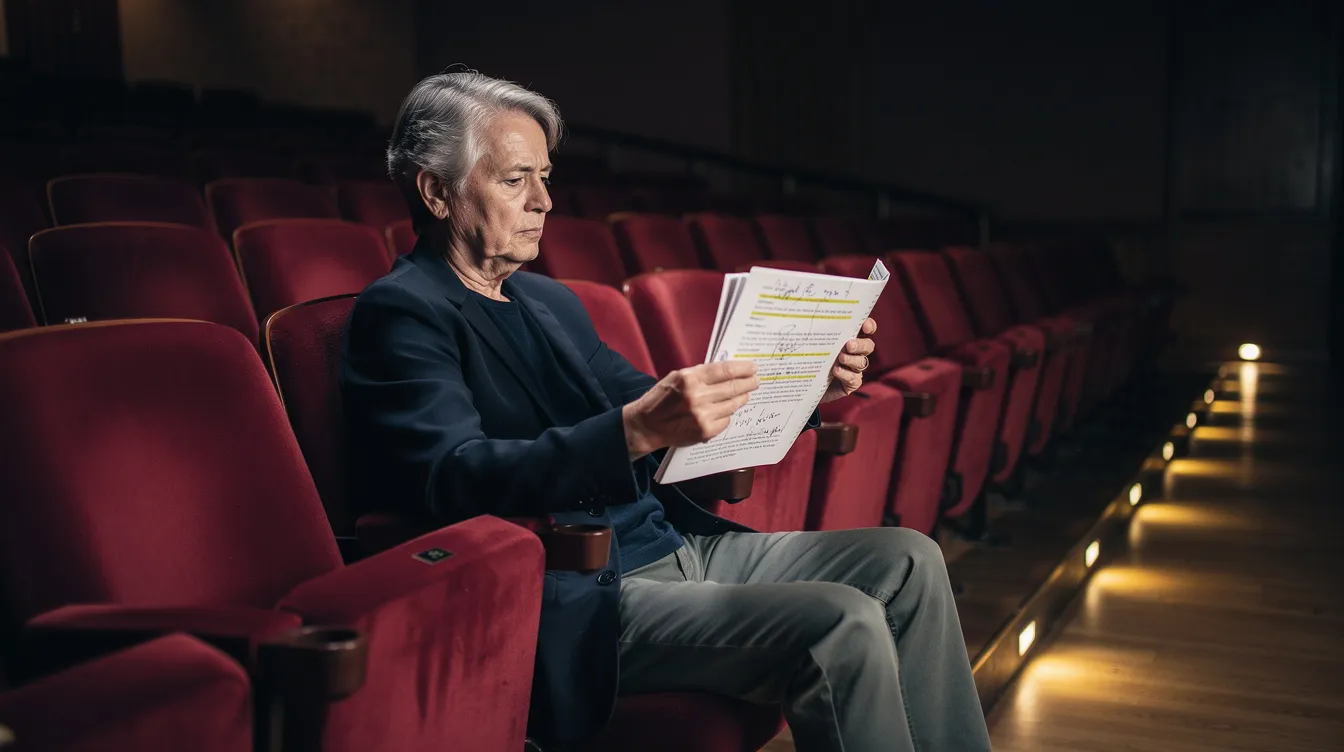
Step 4: Non-Acting Ways Seniors Can Contribute (That Still Keep You in the Theater Family)
Not every senior wants to memorize lines or stay out late for rehearsals, and that’s perfectly fine. Community theater depends heavily on new volunteers who contribute in countless non-acting ways—and these roles often provide the same sense of community and creative fulfillment.
Theaters like Culver City Public Theatre actively recruit year-round volunteers for tasks ranging from set builds to concessions. These positions can be scheduled around daytime hours, mobility needs, and medical appointments, making them especially senior-friendly.
Common volunteer roles include:
- Ushering: Greeting audience members, distributing programs, assisting with seating (1-2 hours per show)
- Box office: Selling or scanning tickets, answering phones (2-3 hours per show)
- Concessions: Preparing and selling refreshments during intermission
- Set construction: Daytime painting and building, typically 2-4 hour shifts
- Stage managers and crew: Supporting lighting, sound, and stage management during performances
- Publicity: Distributing fliers, managing social media, or making donor calls
Retired professionals are particularly prized. Accountants help with budgeting, teachers contribute to youth education programs, and marketers assist with publicity. If you feel shy about performing, start by volunteering—you’ll learn the building, meet the regulars, and gain experience that makes auditioning later feel natural.
Step 5: Working Around Mobility, Memory, and Health Considerations
It’s reasonable to have concerns about stamina, stairs, transportation at night, memory, hearing, or vision. Acknowledging these challenges upfront helps you find the right fit and ensures a positive experience.
Before committing to any production, ask practical questions:
- Is the rehearsal space elevator-accessible?
- Are there seats available backstage for breaks?
- How many late-night rehearsals are typical?
- Can scripts be provided in larger print?
- Is there flexibility for medical appointments?
If extended evening rehearsals concern you, consider lighter formats. Small-cast one-acts, readers’ theater, or daytime senior showcases at community centers like Florida’s Central Florida Center for the Arts offer engaging arts participation without exhausting schedules.
Memory support strategies help tremendously with learning lines. Try larger-print scripts, highlighting your lines with bright colors, practicing in short daily sessions rather than marathon cramming, and using line-prompting apps on your phone or tablet.
Be open with directors about your limitations. Most will gladly adjust staging with seated blocking, shorter scenes, or dual casting when needed. Programs like the UK’s Elders Company train participants aged 60+ on accessible, intergenerational projects—demonstrating that accommodations are standard practice, not special favors.
Many venues already comply with ADA standards and genuinely value what seniors bring to each production. When directors know what you need, they can plan ahead and ensure you’re set up for success.
Step 6: Benefits of Community Theater for Seniors—Beyond the Spotlight
Research consistently links theater involvement with significant improvements in well being for older adults. Reduced isolation, enhanced mood, cognitive sharpness, and renewed confidence emerge from creating something meaningful alongside others.
The social benefits alone are worth the effort. You’ll form friendships with people ranging from teenagers to fellow octogenarians, all united by a shared passion for storytelling. That sense of belonging to a creative team combats the loneliness that too often accompanies retirement and aging.
Cognitive and emotional benefits compound over time. Learning lines exercises memory, rehearsals demand creative problem-solving, and expressing feelings through characters provides emotional outlets that daily life might not offer.
Consider Robert, a 72-year-old widower who joined a local production in early 2025 after his wife passed away. What started as a way to fill empty evenings became a source of renewed purpose. He made friends across generations, discovered playwriting classes at the theater, and found himself looking forward to each rehearsal. Stories like his repeat across community stages nationwide.
Key benefits for seniors in community theater:
- Social: New friendships, multigenerational connections, team belonging
- Cognitive: Memory exercise, creative problem-solving, learning new skills
- Emotional: Creative expression, confidence building, sense of purpose
- Community impact: Sharing generational insights, teaching youth about different eras
Step 7: Taking Your Next Steps This Month
Moving from interested to involved doesn’t require a dramatic leap. A simple 30-day action plan can transform curiosity into participation.
Here’s a practical week-by-week approach:
- Week 1: Search online and check local postings. Make one phone call or send one email to a nearby theater.
- Week 2: Attend a performance or open house to see the community in action.
- Week 3: Sign up to usher for a single show or attend an audition for new productions.
- Week 4: Commit to a specific role—whether that’s a one-night volunteer shift or spring 2026 set painting.
Start small. A single evening ushering or a one-day set-painting session in summer 2026 requires minimal commitment while letting you test the waters. Once you’re familiar with the building and faces, deeper involvement feels natural.
Community theater needs your stories, patience, and humor—qualities that only grow with age. Whether you’re interested in taking center stage or prefer supporting new plays from behind the scenes, there’s a place waiting for you. Directors, cast members, and audiences alike benefit when real people with real life experience join the fun.
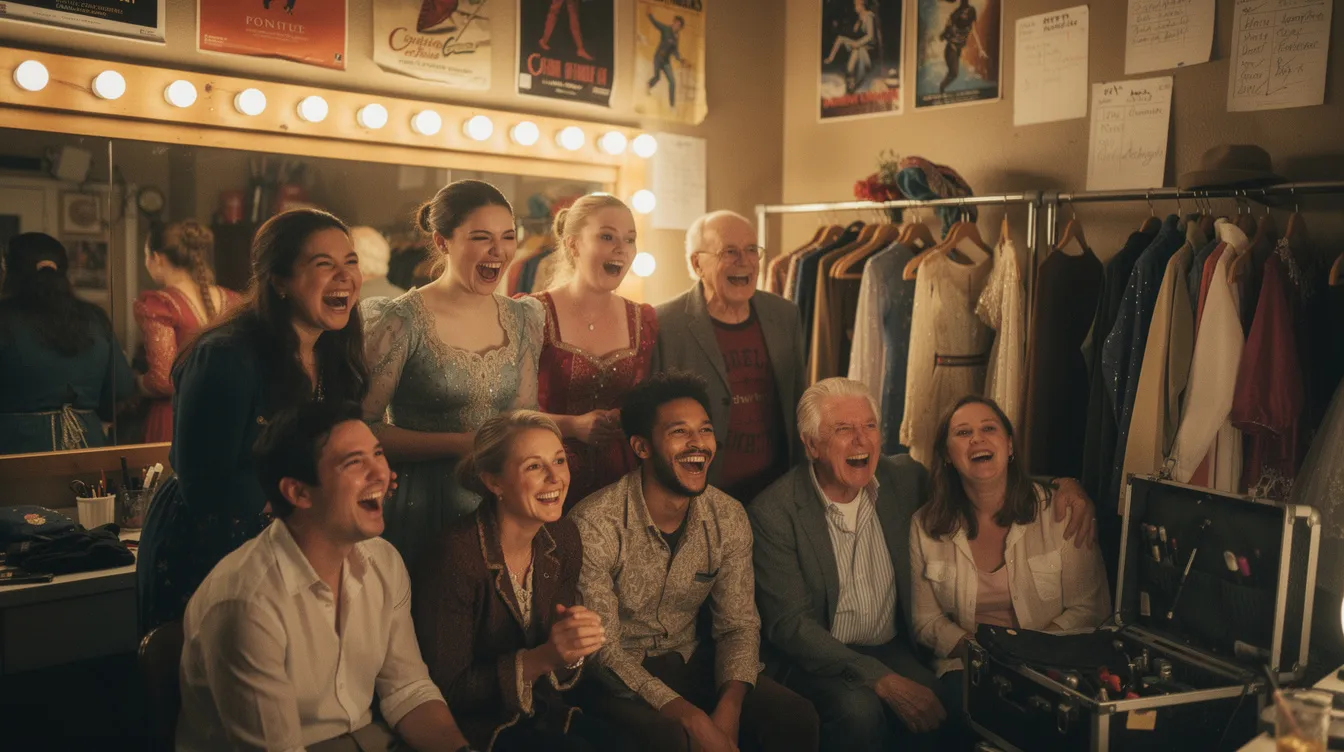
FAQ: Common Questions Seniors Ask About Joining Community Theater
This quick FAQ addresses concerns that seniors considering theater in 2025-2026 frequently raise.
Am I too old to start? Absolutely not. Programs like Broadway Senior and Theater 55 thrive on participants aged 65 and older. Many community theaters actively seek seniors for age-authentic casting that younger actors cannot provide.
Do I need experience? No prior experience is required. Most community theatres welcome complete beginners with open arms alongside seasoned performers. Your willingness to learn matters more than your résumé.
What if I use a cane or walker? Accessible roles and ADA-compliant spaces accommodate mobility devices. Many scenes can be staged with seated blocking, and front-of-house roles work perfectly regardless of mobility.
What does a typical rehearsal schedule look like? Most productions rehearse 2-3 evenings per week plus some weekends over 6-8 weeks. Theaters often minimize late nights when seniors are involved.
Is there any pay? Community theater roles are volunteer positions. Occasionally, teaching or design work offers small stipends, but most participation is unpaid—the rewards come in creativity, friendship, and personal development instead.
Are seniors actually wanted, or just tolerated? Seniors are genuinely sought after. Authentic portrayals of older characters require real older adults, and your life experience enriches every cast you join.